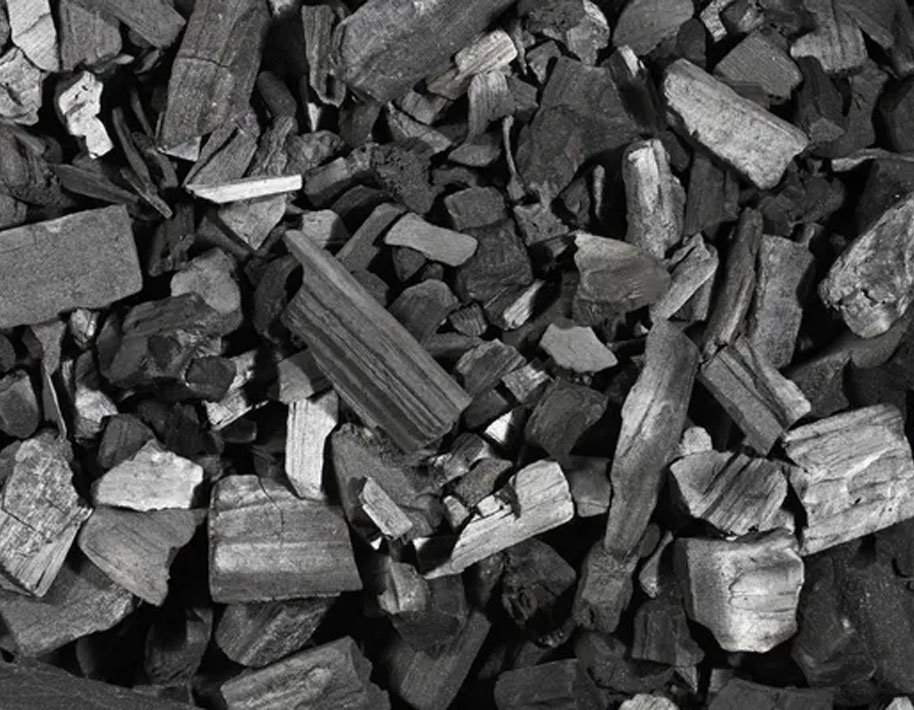
The advantage of burning it compared to burning wood is the absence of water and other components. This allows it to burn at higher temperatures, and give off very little smoke (regular wood gives off a good amount of steam, organic volatiles, and unburnt carbon particles — soot — in its smoke).
A porous black solid, consisting of an amorphous form of carbon, obtained as a residue when wood, bone, or other organic matter is heated in the absence of air.
Activated charcoal is a fine, odorless, black powder often used in emergency rooms to treat overdoses. Its toxin-absorbing properties have a wide range of medicinal and cosmetic uses, though none are scientifically proven.
Superheating natural sources of carbon, such as wood, produces activated charcoal. The black powder stops toxins from being absorbed in the stomach by binding to them. The body is unable to absorb charcoal, and so the toxins that bind to the charcoal leave the body in the feces.